
Wisdom Teeth Extractions – Enfield, CT
Save Your Smile from Future Problems
Wisdom teeth are the third molars at the back of the mouth. Many people can retain them for a lifetime and experience no complications. Often, however, they can lead to severe consequences for a person’s oral health if they are not removed. Here, learn why wisdom teeth extractions in Enfield are often necessary and how our team can help you through your procedure.
Reasons for Wisdom Teeth Extractions
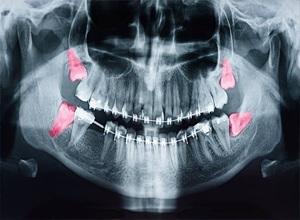 Most people’s mouths are too small to comfortably accommodate all of their wisdom teeth. Therefore, when these third molars begin to erupt, they can lead to a number of problems, including:
- An increased risk of infection
- Damage to the second molars (which are right next to the wisdom teeth)
- Overcrowding
- Misalignment
- Pain
- Tooth decay on the wisdom teeth and those next to them
Some individuals choose to have their wisdom teeth removed even before any of the above issues occur; they opt for the extraction procedure as a purely precautionary measure. If you are wrestling with the decision of whether to get your wisdom teeth removed, visit us for a checkup. We’ll examine your wisdom teeth and give you our professional, expert opinion on what you should do with them.
Most people get their wisdom teeth removed when they are in their mid to late teens or early 20s because the surgery tends to be easier for dentists and patients when people are in that age range. However, it isn’t uncommon for older individuals to undergo the procedure.
The Extraction Process
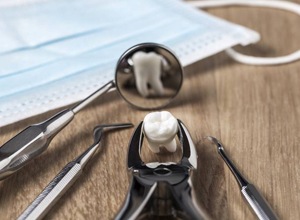 In most cases, we’re able to handle wisdom teeth extractions right here in our office. You won’t have to entrust your precious smile to someone you don’t know and who hasn’t yet earned your trust.
The first step in the extraction procedure is to make sure that you’re comfortable. We offer sedation to help you relax throughout the surgery, and we make sure the area where we’re working is completely numb. Then, we begin to remove the teeth. Sometimes, this involves making an incision in the gums and/or breaking the teeth into smaller pieces in order to make them easier to remove. Once the teeth are out, we will close up any incisions and place gauze pads at the extraction sites.
After Wisdom Teeth Extractions
 We often recommend that our patients take at least three or four days off of work or school in order to recover from their procedure. During that time, you may be a little groggy, and you may experience some swelling and tenderness at the extraction sites. To make your recovery go as smoothly as possible, you should:
- Eat soft foods
- Take all medication as prescribed
- Do not drink through a straw
- Use ice to mitigate swelling
- Avoid cigarettes and chewing tobacco
- Call your dentist in Enfield if you experience any intense pain, a fever, or other signs of complications. (Such complications are uncommon, but they require prompt attention.)
Do you believe that you may need to get your wisdom teeth extracted? Contact Four Town Dental today to schedule your consultation.
Understanding the Cost of Wisdom Tooth Extractions
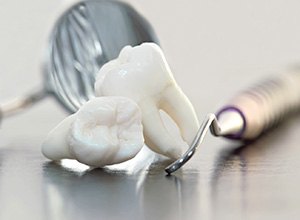
The cost of wisdom tooth extractions depends on a few factors. During your consultation, we can share specific numbers and help you understand your payment options. For example, we welcome insurance. We also accept financing through third-party companies, and we even have an in-house discount plan for individuals without insurance. Remember that getting your wisdom teeth removed can be a smart investment in your comfort and long-term oral health.
Factors That Can Impact the Cost of Wisdom Tooth Extractions

Some factors that could influence the cost of your procedure include:
- The number of wisdom teeth being removed. Some patients choose to get all four wisdom teeth removed at once, while others choose to only extract the wisdom teeth that are currently causing symptoms. Plus, some people never develop all four wisdom teeth.
- If your wisdom teeth are stuck in your jawbone or gums, they will take more time and effort to remove. The type and severity of the impact can influence how your procedure goes and its overall cost.
- Comfort measures. Our team offers nitrous oxide sedation and oral conscious sedation. These can keep you comfortable during your procedure, but they do come with a separate fee.
- The dentist who performs your procedure. Our highly skilled Enfield team can handle most wisdom tooth extractions in-house. If we need to refer you to an outside specialist, you can expect them to have a pricing structure that differs from our own.
Does Dental Insurance Cover Wisdom Tooth Extractions?

Very often, yes, dental insurance does cover wisdom tooth extractions. In many cases, the procedure is classified as a major treatment, so around 50% of its cost may be covered, up to the amount of your plan’s annual maximum. Thanks to insurance, many patients are able to reduce their out-of-pocket obligation by hundreds of dollars or more. At Four Town Dental, we welcome insurance and are in-network with many companies. You can rely on us to help you through the process of using your benefits.
Other Options for Making Wisdom Tooth Extractions Affordable

Outside of dental insurance, other provisions that might make it easier to afford your wisdom tooth procedure include:
- We accept third-party financing from CareCredit and Sunbit. The application process is quick and easy, and we will be happy to walk you through it.
- Essential Dental plan. This in-house discount plan provides reduced fees on most the services available in our office. Signing up takes just a few minutes, and you can start to use your benefits immediately.
Wisdom Tooth Extractions FAQs
Why do we have wisdom teeth?
Wisdom teeth are often a source of frustration for modern individuals, but they were actually necessary for our ancient human ancestors. Early humans existed on a rough diet that contained lots of nuts, leaves, raw meats, and other items that required some serious chewing power. As you can imagine, their teeth wore out quickly. By the time they reached adolescence, a third set of molars (wisdom teeth) could be invaluable.
As the ages have passed, the human body has adapted to a softer diet that is much easier to chew. As a result, the average mouth has become smaller, and wisdom teeth have become unnecessary. However, the genetic instructions for our bodies to grow wisdom teeth are still very common.
Does everyone have wisdom teeth?
Most people develop four wisdom teeth, one at each quadrant of the mouth. However, some never develop any at all! Some individuals just get one, two, or three wisdom teeth. In rare cases, people get more than four wisdom teeth.
Keep in mind that even if you do not see your wisdom teeth, you might still have them. They may stay impacted (stuck beneath the gumline). Our team can take some X-rays to determine if you have them and whether you may need wisdom tooth extractions in our Enfield office.
How should I prepare for my wisdom tooth extraction?
As your caring dentist in Enfield, we will provide all the information you need to prepare for your procedure. We may advise you to:
- Wear comfy clothes.
- Arrange for someone to drive you to and from your appointment (especially if you will be sedated).
- Eat a healthy, satisfying meal. (Some types of sedation require you to be in a fasted state, so this instruction can vary from case to case.)
- Stock your kitchen with soft foods that you can enjoy during your recovery.
- Ask our team if you have questions or concerns, and be sure to inform us of all your current medications and diagnoses.
How do you make wisdom teeth pain go away?
The only permanent solution for wisdom teeth pain is to get them extracted. Before your appointment, though, you can mitigate discomfort with these tips:
- Apply a cold pack to the side of your face for 20 minutes at a time.
- Take over-the-counter pain medications, such as ibuprofen or acetaminophen.
- Eat a soft diet, and avoid crunchy foods that might get stuck between your teeth or irritate inflamed tissues.
- Apply a topical numbing gel to the painful area.
- Periodically rinse your mouth with warm salt water.
Is wisdom tooth removal painful?
We want you to be as comfortable as possible during your wisdom tooth procedure. Therefore, we will use local anesthesia to numb your mouth. In some cases, we also administer sedation; we offer both nitrous oxide and oral conscious sedation. Thanks to these provisions, you should feel little to nothing during your appointment.
After the anesthesia and sedation wear off, you can expect your mouth to be sore and swollen. Our team will provide guidance to help you through your recovery. Most patients are pain-free within 1 – 2 weeks of their procedure.