
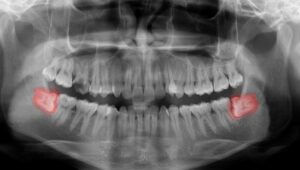
Ideally, teeth should come in straight, rising up through the gumline in a way that allows them to fit comfortably with the teeth next to them and across from them. When that happens, they can contribute to an even bite and efficient chewing. However, teeth do not always follow that path. Some emerge at an angle, and others may even grow almost entirely sideways beneath the gums. This situation is especially common with wisdom teeth. Why are these third molars so prone to unusual positioning, and what else should you know about sideways wisdom teeth? This blog post explains.
Why Do Wisdom Teeth Grow Sideways?
Wisdom teeth are the last adult teeth to develop, usually appearing in the late teenage years or early twenties. By that point, the rest of the smile is already in place, so there may be very little room left for another set of molars. If the jaw does not have enough space, the wisdom teeth may be blocked by bone, gum tissue, or neighboring teeth as they try to emerge.
When they meet this resistance, they may shift into a tilted or horizontal position instead of erupting normally. The angle can be mild, or the tooth may lie nearly flat. This type of wisdom tooth is often considered “impacted” because it remains stuck under the gums.
Problems Caused by Sideways Wisdom Teeth
A sideways wisdom tooth is not always painful at first, but it can create trouble over time. Possible complications include:
- A wisdom tooth that presses against the molar in front of it can contribute to crowding, shifting, and bite changes. The pressure may also lead to soreness in the jaw or nearby teeth.
- Food particles and plaque can collect around a partially erupted or angled tooth, making the area more difficult to brush and floss thoroughly. In turn, bacteria may build up around the tooth and gums, increasing the risk of cavities, gum inflammation, infection, and abscesses.
- Although uncommon, more serious issues such as cysts or damage to nearby structures can develop around impacted wisdom teeth.
Protecting Your Oral Health
The best way to protect your smile is to keep an eye on how your wisdom teeth are developing. Routine dental visits give your dentist a chance to evaluate the back of your mouth and ask about symptoms such as soreness, swelling, or difficulty opening your jaw. X-rays are especially useful because they can reveal teeth that are still hidden below the gumline and show whether they are angled toward neighboring molars.
If your wisdom teeth are growing sideways or are likely to cause problems, your dentist may suggest removal. Wisdom tooth extractions are a common procedure, and modern techniques help make the process as smooth and comfortable as possible.
Sideways wisdom teeth are surprisingly common! Talk to your dentist if you have questions or concerns about the positioning of your third molars.
Meet the Practice
At Four Town Dental in Enfield, our experienced team offers a full range of oral health services, including wisdom tooth extractions. We strive to make the process as easy as possible through the use of local anesthesia and sedation. If it is time to get your wisdom teeth examined, schedule an appointment by contacting us at 860-856-6928.